Heritage 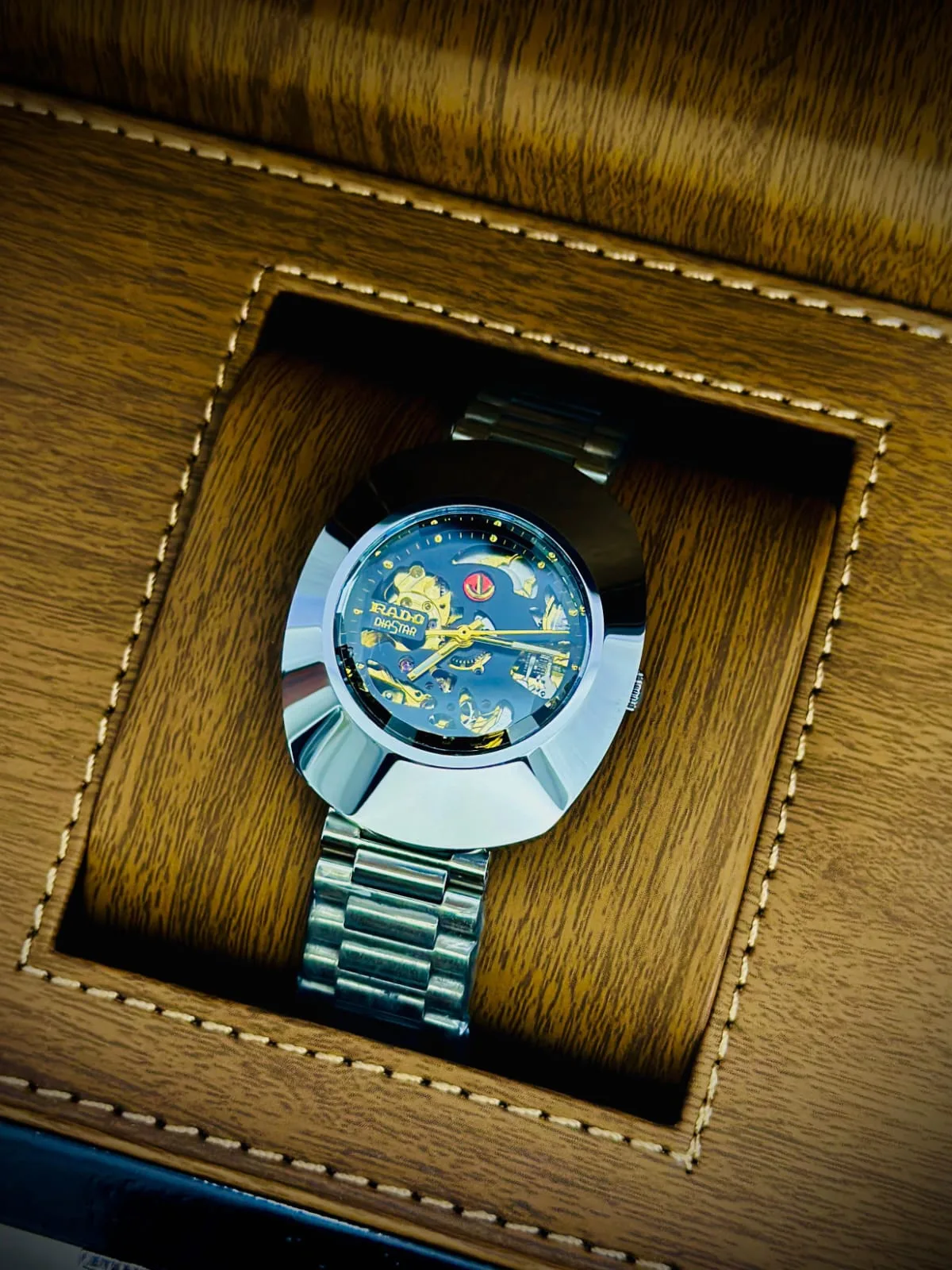
Back to Journal
Skeleton Dials, Explained: What You Are Really Looking At
THE AM Editorial · 29 Jul 2026
A skeleton watch removes as much of the dial and movement plate as structurally possible, so what you're looking at is the mechanism itself rather than a cover for it. A few landmarks help it make sense: the balance wheel is the small wheel oscillating rapidly near the edge — it's the watch's heartbeat, ticking (or sweeping, in a high-beat movement) several times a second. The mainspring barrel is the largest visible drum, storing the energy that powers everything else. Bridges are the shaped metal plates — often the most decorated parts, sometimes hand-bevelled — that hold the gear train in place.
Our Hublot and Rado skeleton pieces make a good side-by-side study: Hublot favours bold, architectural bridges you can read at a glance, where Rado's DiaStar keeps a denser, more traditional gear-train view. Neither is more 'skeleton' than the other — it's simply a different design language applied to the same idea.
Our Hublot and Rado skeleton pieces make a good side-by-side study: Hublot favours bold, architectural bridges you can read at a glance, where Rado's DiaStar keeps a denser, more traditional gear-train view. Neither is more 'skeleton' than the other — it's simply a different design language applied to the same idea.
Back to Journal